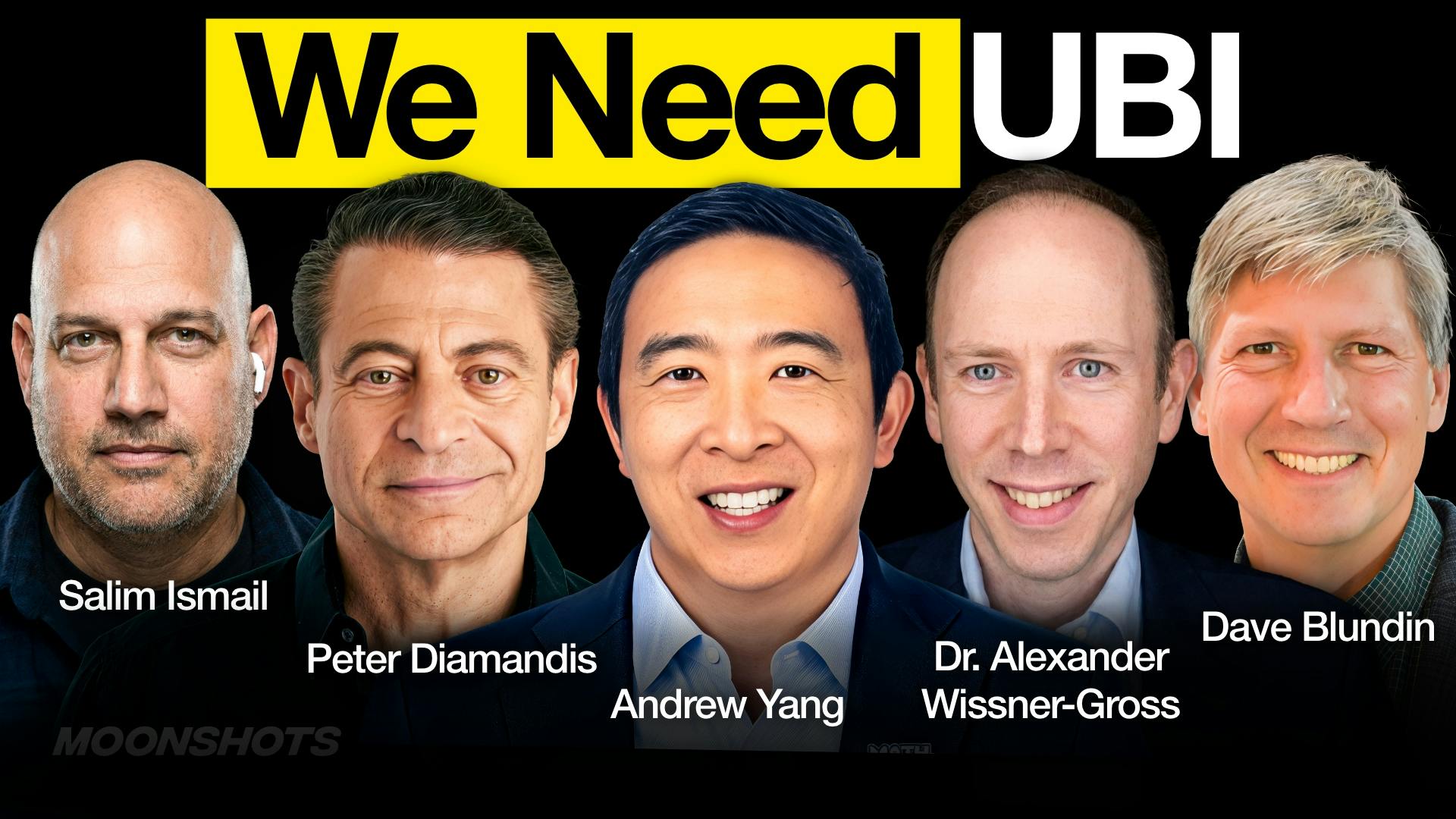
The podcast explores the transition from Universal Basic Income (UBI) to a potential future of Universal High Income (UHI), driven by rapid advancements in AI and robotics. As automation displaces traditional jobs, the discussion highlights the risks of political systems failing to adapt, exacerbating social unrest and eroding the social contract. Concerns are raised about job displacement, particularly for older workers and those in traditional sectors, while the value of college degrees and stable career paths is questioned in an era of economic uncertainty. The conversation emphasizes the need for systemic solutions, including UBI as a short-term stabilizer, to mitigate the economic and social fallout of technological disruption.
The podcast also delves into the challenges of implementing UBI, weighing government action against private philanthropy and tech innovation. While government initiatives are seen as unlikely due to bureaucratic inefficiencies, private effortssuch as billionaire-funded experiments or tech companies redistributing wealthare proposed as potential catalysts. Economic trends suggest that AI and automation could generate unprecedented wealth, potentially funding UBI through mechanisms like universal basic services (UBS), which prioritize affordable access to essentials like housing, healthcare, and education. However, the transition from a labor-based economy to UBI or UBS faces resistance from political institutions and entrenched interests.
Looking ahead, the discussion emphasizes the urgency of addressing generational and societal divides, including youth disillusionment, rising debt burdens, and the erosion of the American Dream. While entrepreneurship is framed as a key pathway for future stability, systemic barriers and inequities limit access for many. The podcast concludes with calls for proactive, optimistic visions of the futureinspired by "Star Trek"-style scenarios of abundance and collaborationrather than dystopian narratives. Central to this vision is leveraging AI and innovation to create a multivariate economy that prioritizes purpose, human flourishing, and equitable access to resources.