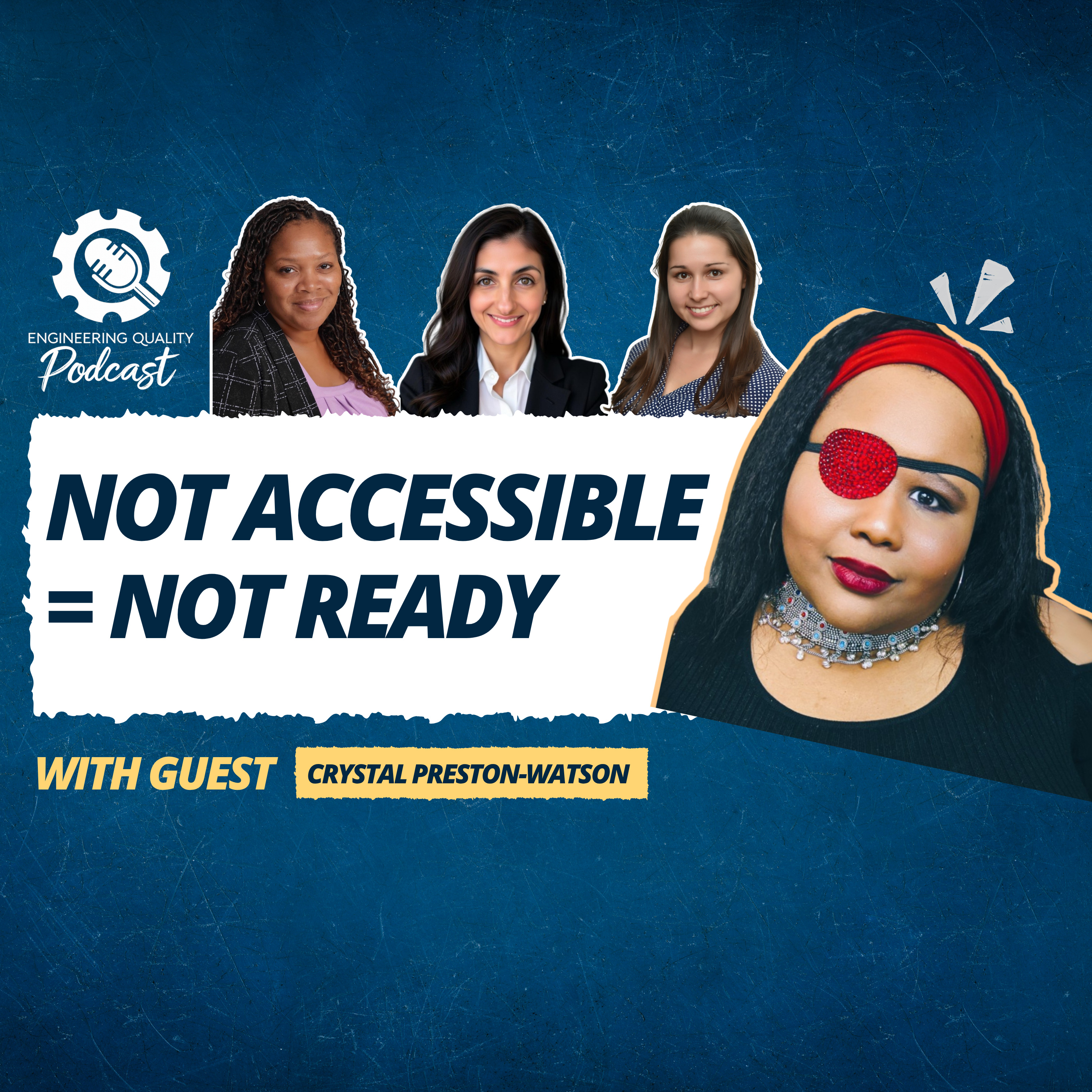
The podcast emphasizes the critical need for accessibility and inclusive design in digital spaces, highlighting practical strategies to ensure universal access for people with disabilities. It explores how personal experiences, such as Krystal Preston Watsons relationship with her grandmother who lived with diabetes and lost both legs, shaped her commitment to accessibility advocacy. Watsons career transition from journalism and web design to QA testing underscores the integration of investigative problem-solving skills into accessibility work, while her own visual impairments further informed her understanding of the challenges faced by users relying on tools like screen readers. The discussion stresses that accessibility should not be an afterthought but a core principle embedded into software development, requiring leadership prioritization, policy integration, and continuous testing to avoid regression or legal risks.
Key challenges in adopting accessibility practices include organizational inertia, lack of leadership buy-in, and cultural biases like ableism, which often deprioritize accessibility in favor of short-term financial goals. The conversation critiques the overreliance on automated tools for accessibility testing, emphasizing that they cannot replace human testingespecially with people who have disabilitiesto uncover nuanced usability issues. It also addresses the ethical imperative to hire individuals with disabilities for testing roles, ensuring fair compensation and leveraging lived experience. Additionally, the discussion highlights the economic and ethical arguments for accessibility, noting that ignoring it risks lawsuits, revenue loss, and exclusion from a growing market segment. While AI is briefly examined as a potential tool for accessibility, the podcast cautions against overhyping it, advocating instead for user-centered innovations that address real needs rather than speculative solutions.