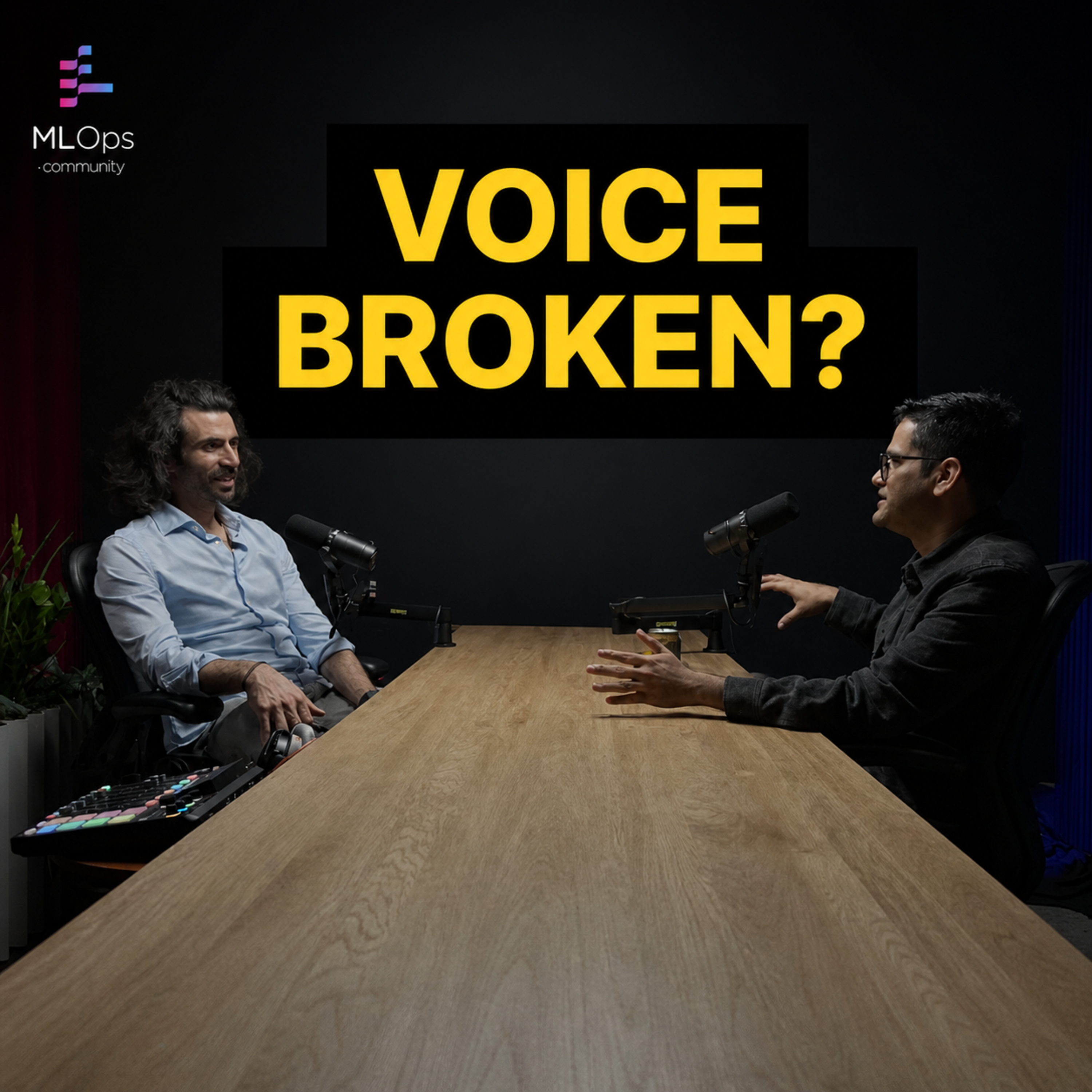
The podcast discusses the technical and design challenges of building voice-based AI systems, particularly for customer support and other complex applications. Key challenges include balancing automation with user control, ensuring flexibility for both technical and non-technical users, and managing trade-offs between speech quality, latency, and usability. Voice systems face unique difficulties compared to chat, such as ambient noise, accents, and the complexity of natural, multi-turn dialogues. Existing orchestration tools are geared toward developers, leaving non-technical users like customer support managers with limited options, despite their reliance on standardized operating procedures (SOPs). Solutions like 11 Labs aim to create user-friendly interfaces that mimic SOP workflows, enabling non-technical users to define agent behavior while maintaining compliance with rules and addressing ambiguities.
The discussion also highlights the importance of feedback loops, where human managers refine AI agents through natural language input, and the need for context-aware systems that integrate speech recognition (ASR), large language models (LLMs), and text-to-speech (TTS) technologies. Hybrid architectures, combining lightweight models for low-latency tasks with more powerful models for complex decisions, are proposed to optimize performance, though managing multiple models introduces challenges in updates and reliability. Domain-specific fine-tuning is emphasized, as voice interactions vary significantly across regions and industries, requiring tailored models and benchmarks. Additionally, ethical and usability concerns arise, including the need for transparency, trust in AI interactions, and the balance between automation and human oversight in high-stakes scenarios.