AI agents in enterprise require robust governance, security, and scalable data infrastructure to prevent vulnerabilities and enable compliant, context-aware use cases like Stripe's Kai.
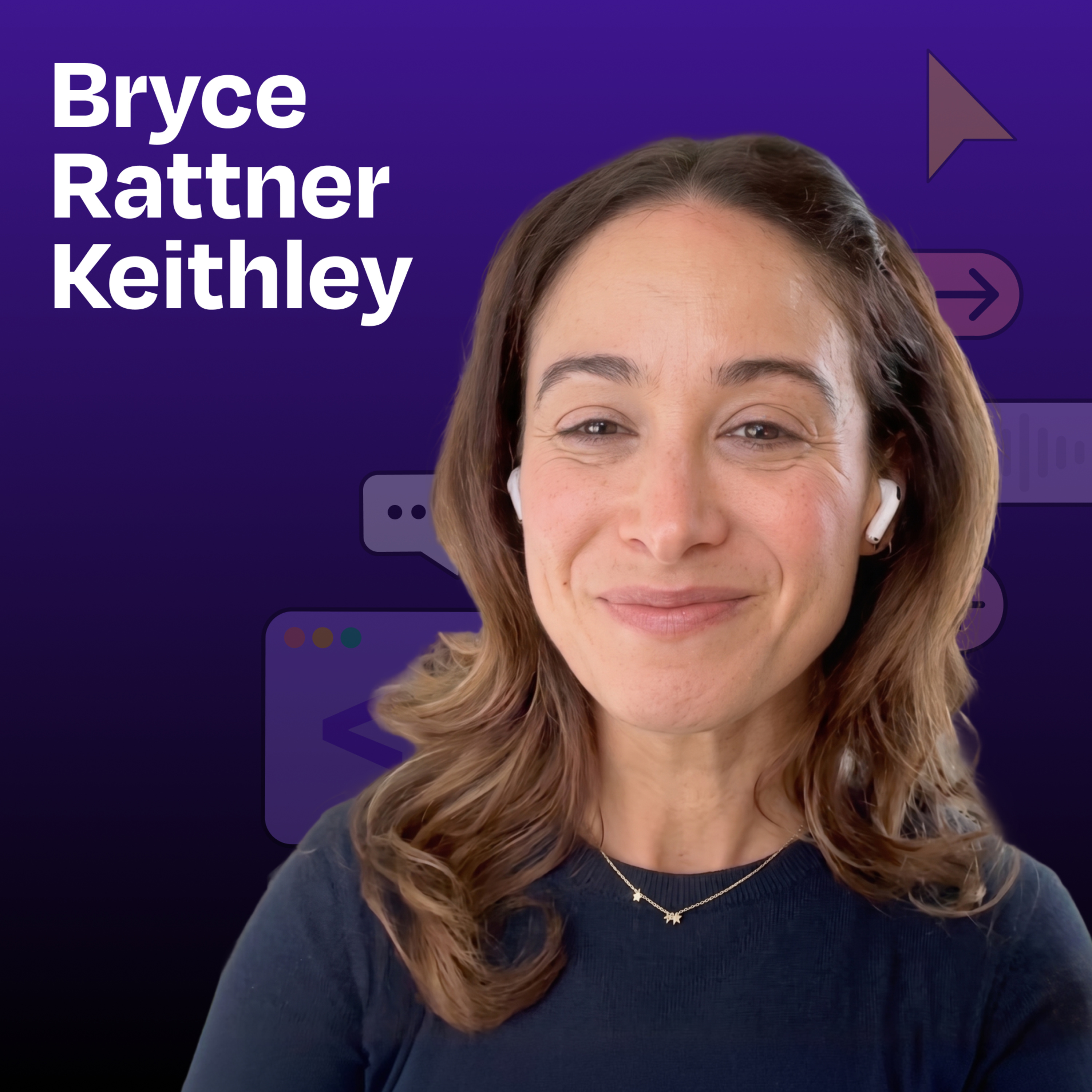
Building an iPhone app with zero technical skills | Bryce Rattner Keithley
Published 1 Jun 2026
Duration: 00:46:33
A non-technical developer created the *Daily Hundreds* iPhone app using AI tools like Replit and Gemini, blending personalized workouts with anthropomorphic animal demonstrations, overcoming technical hurdles through iterative testing and adaptive problem-solving.
Episode Description
Bryce Rattner Keithley hasspent her career in talent and recruiting, working with technical leaders but never writing a line of code herself. Yet she...
Overview
The podcast explores the development of an iPhone app, Daily Hundreds, created using AI tools like Loveable, Replit, and Gemini. The apps minimum viable product (MVP) was built with minimal prompts and features customized workout exercises alongside anthropomorphic animal demos designed to engage users. The creator, a non-technical individual with a background in talent and recruiting, emphasized a beginners mindset and leveraged AI tools to overcome limited technical expertise. Replit was highlighted as a user-friendly platform for non-experts, enabling the rapid prototyping of production-ready apps, even for those with no prior coding knowledge. The apps core functionality was inspired by a pandemic-era 100-rep challenge, with development spanning from October to its recent App Store approval. Challenges included mastering precise AI prompts for generating accurate animal exercise poses, using tools like Higgs Field to merge AI-generated images with human exercise footage, and iterative testing to refine results.
The creation of anthropomorphic animal videos involved combining Gemini-generated images with recorded exercise demonstrations, emphasizing the importance of detailed, literal prompts to achieve correct postures. The process required troubleshooting AI-generated inaccuracies, such as unintended animal positions or extra characters, through iterative refinement and testing. User engagement was prioritized by making workouts approachable and varied, with features like 100-rep challenges. External hosting platforms like Railway were used for deployment without requiring deep technical understanding of their inner workings. The project also involved addressing App Store submission feedback, such as parental controls and compatibility features, through iterative improvements. Additionally, the creator reflected on transitioning from a career in people and talent work to app development, underscoring the role of AI in bridging the gap between non-technical skills and digital product creation, while emphasizing adaptability, collaboration, and the potential of AI to democratize development.
What If
-
What if you leveraged AI-generated content factories to scale workout variety for your app?
- Move: Build a "content factory" workflow using Gemini + Higgs Field to generate anthropomorphic animal workout demos on-demand, based on user input or scheduled triggers.
- Why Now? Your existing MVP already uses this technique, and the iterative refinement process has proven scalable. Expanding this would reduce manual video creation time.
- Expected Upside: Automate 70% of video production for new workouts, enabling feature updates without hiring creators.
-
What if you built a hybrid backend using Replits infrastructure to avoid dependency on external hosting platforms?
- Move: Migrate your apps state management (e.g., progress tracking or user data) into Replits backend capabilities, minimizing reliance on Railway or other services.
- Why Now? Replits backend tools are already in your workflow, and App Store approval shows your apps core logic works. This would address your current ignorance of hosting infrastructure.
- Expected Upside: Reduce deployment complexity, lower hosting costs, and enable faster feature iteration by centralizing your tech stack.
-
What if you turned the 100-rep challenge into a personalized, AI-driven habit-building system?
- Move: Use user performance data (e.g., reps completed, time spent) to generate adaptive workout challenges via AI prompts, dynamically adjusting difficulty or bringing in new animal characters.
- Why Now? The 100-rep challenge inspired your core feature, and your app is already live with user engagement metrics to refine this.
- Expected Upside: Increase user retention by 30% through gamified, personalized challenges that evolve with user behavior.
Takeaway
- Leverage AI tools like Replit and Gemini to rapidly prototype an MVP, using minimal prompts and iterative testing to build functional app features (e.g., workout demos with anthropomorphic animals) without deep technical expertise.
- Utilize external hosting services like Railway for deployment, focusing on their ease of use rather than mastering their infrastructure, to bypass technical barriers during app launch.
- Create engaging video content by combining AI-generated anthropomorphic animal images (via Gemini) with your own exercise footage, using tools like Higgs Fields Kling model for merging visuals, and refine prompts iteratively for accurate posturing.
- Adopt Replits Plan Mode and Preview Panel to validate app functionality in real time, reducing unintended changes (e.g., accidental progress bar edits) during development.
- Prioritize user feedback and App Store requirements (e.g., parental controls, Sign in with Apple) by testing features pre-submission and iterating based on platform feedback to avoid rejection.
Recent Episodes of How I AI
3 Sept 2026 GPT-6 Astra is a banger - heres everything Ive built
"GPT-6 Astra, now live for Daybreak customers, is the most advanced model yet, excelling in math, coding, and automation, with double the automation scores of prior versions and advanced browser/software interaction, priced at $10M input/$50M output tokens."
31 Aug 2026 How I turned Claude into a self-improving PM assistant | Daniel Blum (PM, Melio)
"AI tools dramatically boost productivity by automating tasks, enhancing decision-making, and managing communications, while AI-powered systems scale workflows, adapt to work styles, and reduce cognitive load, with future potential for handling coordination tasks autonomously."
24 Aug 2026 I spent $20,000 on Devin in a month. Heres what I learned | Ryan Carson (solo founder)
"AI is reshaping engineering and business by shifting focus to managing cloud-based AI agents, prioritizing tasks (P0 for critical, P2 for less urgent), and balancing automation with human roles like strategic decisions and customer interaction, while addressing challenges in scaling and securing AI-driven workflows."
5 Aug 2026 Build an AI code review bot in 30 minutes with Vercel Eve
"AI-powered automated PR review systems streamline software development by scoring and auto-approving low-risk changes, boosting throughput, reducing approval times, and maintaining compliance, as demonstrated by tools like Vercel's Eve and industry adopters like Intercom."