9 Sept 2026 1037: WebMCP is here (and you should care)
"WebMCP enables AI agents to interact directly with web apps via browser-based protocols, improving efficiency, security, and collaboration across platforms."
More Syntax - Tasty Web Development Treats episodes
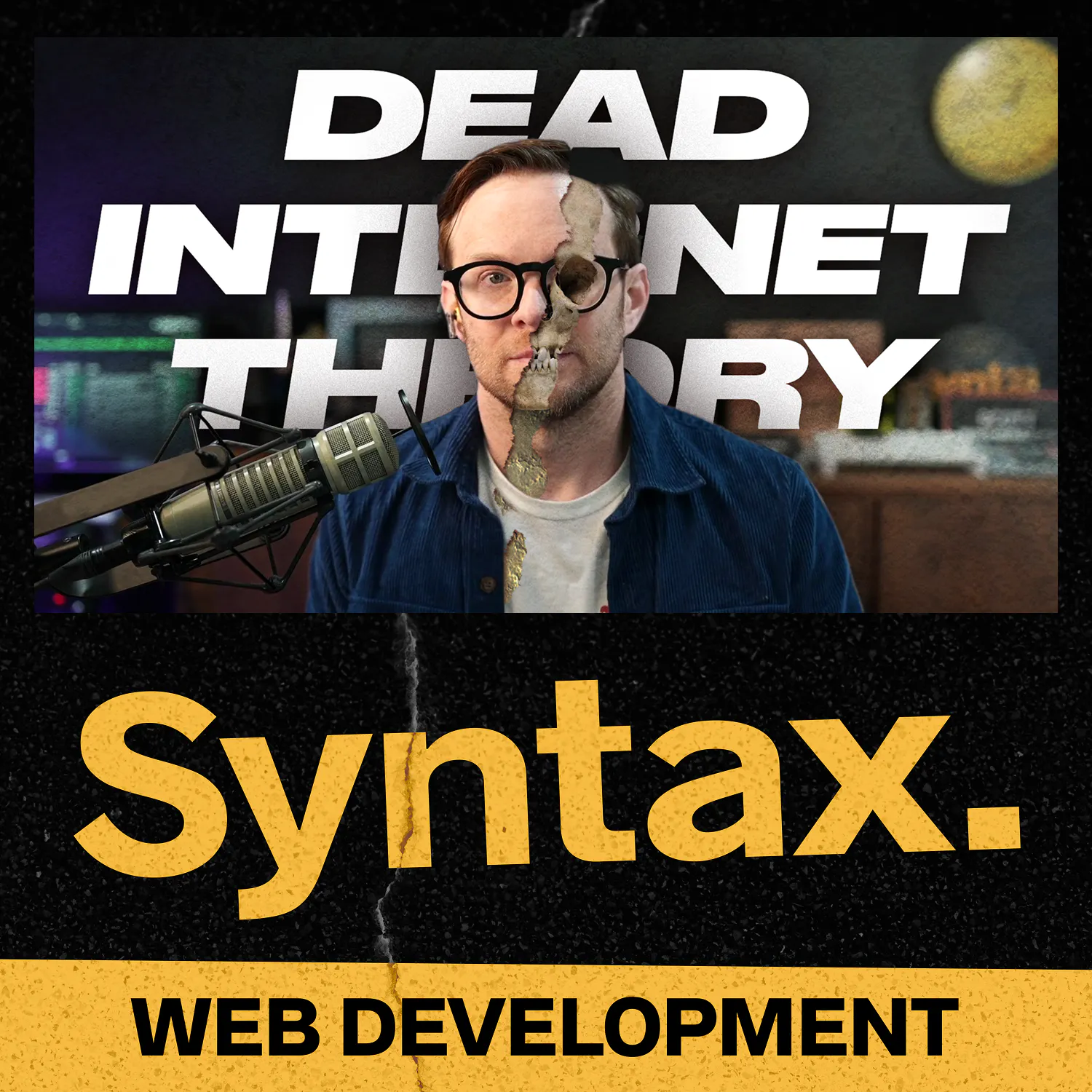
Published 29 Jun 2026
Duration: 01:23:18
The podcast examines the surge of bots on social media, their dual role as tools and threats amid 60% bot traffic, emerging AI frameworks, ethical concerns, shifts in web interaction, and tensions between centralized platforms and decentralized innovation.
Wes, Scott, and CJ break down the latest web dev news. From AI agents and coding tools to Deno Desktop, Nub, and predictive UX. They also discuss bot-...
The podcast explores growing concerns about the prevalence of bots on social media and their impact on online communities. It critiques the erosion of trust in platforms like Reddit and Instagram, where bots spam content, repost outdated material, or generate fake user activity, diluting authenticity. Cloudflares data revealed up to 60% bot traffic online, raising questions about the dual role of bots as both practical tools (e.g., AI agents, web scraping for tasks like retrieving business hours) and potential threats (e.g., data scraping for AI training). The discussion also delves into the rise of agent frameworks like Vercels Eve and Fred Schotts Flu, aiming to streamline workflows, while highlighting debates over standardization, sandboxing for security, and the tension between open and proprietary systems. These frameworks are compared to tools like Dino desktop, which offers a secure, Electron-like runtime for building desktop apps.
The episode also examines the decline of the indie web as users increasingly rely on chat-based interfaces (e.g., Google AI, Claude) and AI agents to fetch information, reducing direct website visits. This shift raises concerns about the "walled garden" effect of platforms like iOS and Android, which control access to content. Critiques of AI-generated design aestheticsmarked by excessive gradients and homogenizationare contrasted with discussions on integrating AI tools into daily life, such as voice-activated assistants and personalized tutorials for hardware like OPXY. Ethical dilemmas include privacy risks of local vs. cloud AI execution, the cost of running large models, and security challenges in decentralized compute networks. Meanwhile, the podcast touches on niche projects, like interactive 3D bookshops or virtual museums, and debates over the future of bot dominance, with estimates suggesting bot traffic could reach 70-95% of online activity. Finally, it addresses controversies around remote work productivity, with critiques of claims that remote work inherently reduces efficiency, emphasizing the role of individual habits and structured environments.
What if you built a bot-detection agent using existing frameworks like Eve or Flu to create a real-time bot traffic classifier?
agent.ts and sandboxed tools.What if you optimized your website to serve structured data (e.g., Markdown) directly to bots instead of HTML?
What if you leveraged Foresight JS to build a 3D interactive bookshop app that prefetched content based on user intent?
getPredictedEvents API to preload book previews when users hover or scroll near dropdown menus, integrating with public domain APIs (e.g., Project Gutenberg).agent.ts and instructions.md configurations.9 Sept 2026 1037: WebMCP is here (and you should care)
"WebMCP enables AI agents to interact directly with web apps via browser-based protocols, improving efficiency, security, and collaboration across platforms."
5 Aug 2026 1027: The Rise of the Design Engineer
"Design engineers merge creativity and technical skills to build functional solutions, facing biases in tech while emphasizing human judgment over AI-generated aesthetics, environmental concerns, and practical coding tips."
29 Jul 2026 1025: The Open Web's second chance (w/ Dan Abramov)
"ATProto is a decentralized data layer enabling users to own and control their data across apps, solving walled gardens and interoperability issues with a standardized, JSON-based system and web-native identity."
22 Jul 2026 1023: Mosh, Caddy & Tailscale: A Remote Dev Deep Dive
"Remote development workflows offer benefits like continuous processing and multi-device access but face challenges like rogue processes and secure local environment exposure, with tools like Tmux, Herder, and Tailscale discussed for managing sessions and networking."
20 Jul 2026 1022: Bun re-written in Rust, Zig team big mad
"TypeScript 7.0 delivers a 10x speed boost, network upgrades include 2G speeds and SFP fiber, AI updates cover GPT 5.6 and Grok concerns, while tech news highlights acquisitions, language releases, and personal tech setups."