More Beyond Coding episodes

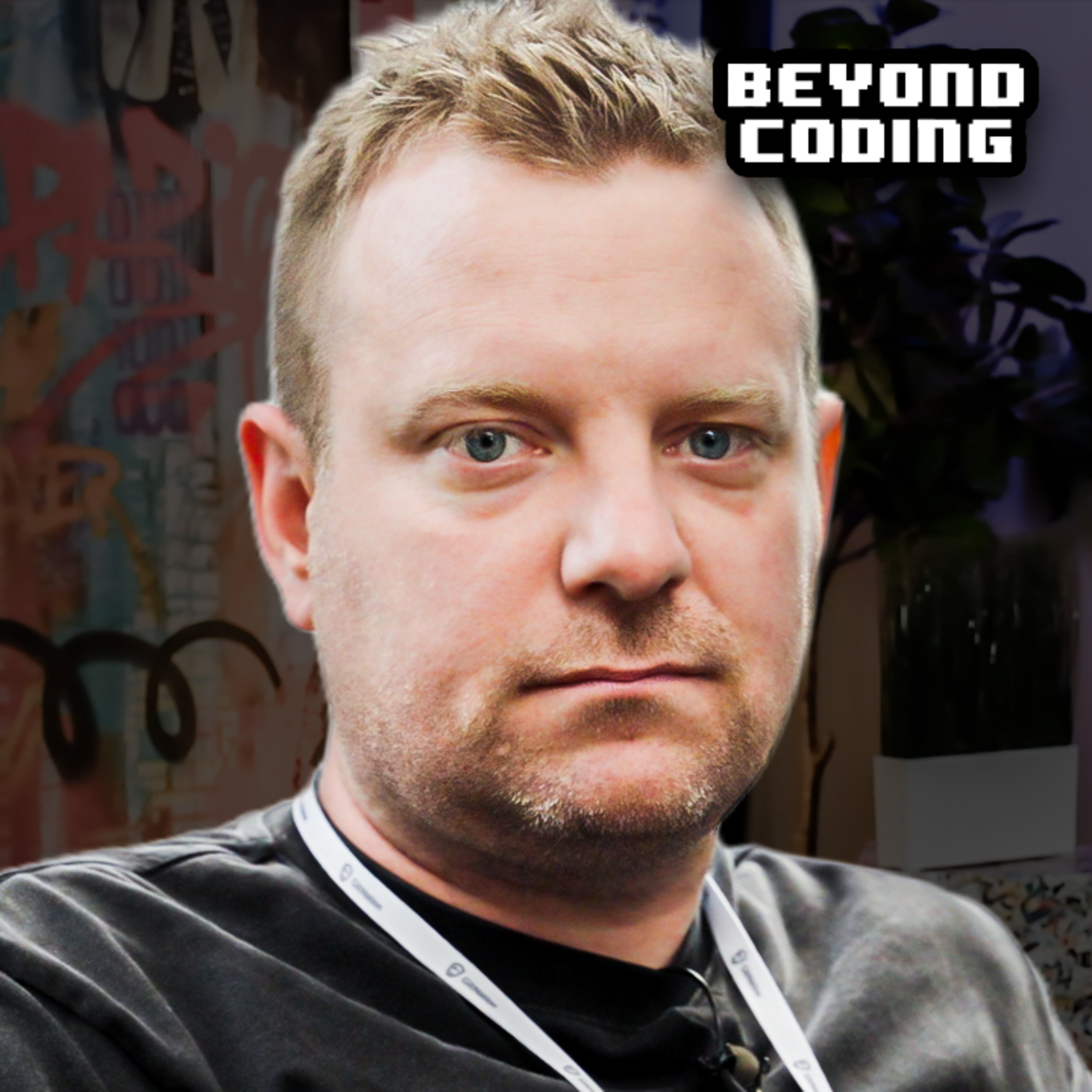
Wes Bos: How Developers Stand Out When AI Writes the Code thumbnail

Wes Bos: How Developers Stand Out When AI Writes the Code

Published 12 Aug 2026

Duration: 00:24:57

"AI's impact on software engineering, design, and personalization - challenges, ethics, and future trends in automation, workflows, and human-AI collaboration."

Episode Description

AI is changing what developers build, but code alone is no longer enough to prove what you can do. Wes Bos explains why engineers need to solve proble...

Overview

The podcast discusses the evolving role of AI in technology, software development, and creative work. Key topics include the rise of generative UI and AI's impact on front-end development, with debate over whether AI can replace human designers or should instead assist in creating context-aware, personalized interfaces. The discussion extends to AI-augmented workflows, where iterative prompting and agent-based systems help refine outputs, automate tasks like Git operations, and improve efficiency - though concerns remain about cost, reusability, and the limitations of current models. There is also exploration of future trends, such as local vs. cloud AI processing and the potential for affordable, high-performance personal AI setups.

In addition to technical themes, the conversation covers broader implications of AI on learning, work, and communication. AI agents are seen as reducing the need for traditional skill acquisition, shifting focus toward problem-solving rather than syntax mastery. Personalization and DIY projects are highlighted, with examples of non-coders building tools using AI assistance. Meanwhile, critiques emerge around AI-generated content, particularly in communication, where automated emails are viewed as impersonal and disrespectful, though acceptable for editing or repetitive tasks. The importance of authentic expression - both emotional and professional - is emphasized, along with the value of human connection through in-person events and deliberate personal branding within the developer community.
What If

  • What if you rebuilt your public content workflow using AI only for editing - not creation?

    • Move: Audit your current content (blogs, tweets, videos) and establish a rule: use AI exclusively to refine human-written drafts - never to generate original ideas or text. Build a repeatable editing pipeline (e.g., grammar pass, tone adjustment, SEO tweak) using a lightweight model like Grok Build or Cursor Composer.
    • Why Now?: AI-generated content saturation (especially in newsletters and social media) is devaluing generic insights; audiences now react negatively to impersonal, synthetic messaging. Standing out requires authentic voice, not volume.
    • Expected Upside: Higher audience trust and engagement, reduced burnout from content pressure, and a defensible personal brand as a genuine thinker - not an AI repeater.
  • What if you automated your dev environment maintenance using agent-augmented loops?

    • Move: Script a local agent loop (using Cursor or OpenCode) that checks your project dependencies, Git status, and CI/CD logs daily, then summarizes issues and suggests fixes - running iteratively until resolution. Start with one repo and harden the workflow over a week.
    • Why Now?: AI models can now handle context-aware, multi-step engineering tasks, but fully autonomous agents still fail on edge cases; loop engineering (human-in-the-loop refinement) delivers reliability today.
    • Expected Upside: 5 - 10 hours/month saved on maintenance, fewer production surprises, and a reusable system you can productize or document for audience value.
  • What if you built a personalized smart dashboard that evolves using your behavior - not templates?

    • Move: Create a minimal Electron/React desktop app that ingests your calendar, GitHub commits, and email highlights, then uses a lightweight local model to reorganize the UI weekly based on usage patterns (e.g., surfaces PR reminders when you typically code). Avoid pre-designed layouts.
    • Why Now?: Generative UI has matured enough to interpret user behavior, but off-the-shelf tools force rigid designs; solo devs can now build custom, adaptive interfaces faster than ever using AI-assisted code.
    • Expected Upside: A 20 - 30% boost in daily focus by reducing context switching, and a unique tool you can open-source or monetize as a niche productivity product.

Takeaway

  • Implement loop engineering in development workflows by designing iterative AI prompt cycles to refine outputs, such as repeatedly querying AI to verify and improve code against API documentation.
  • Focus on 1 - 2 content platforms (e.g., newsletter + Twitter/X) to consistently share technical insights and build public visibility, avoiding fragmentation across too many channels.
  • Use AI selectively for repetitive tasks like Git operations (committing, rebasing) or social media scheduling, but avoid AI for original creative work such as writing talks or design concepts.
  • Build personal tools with AI assistance (e.g., Python scripts for podcast editing) even without deep prior expertise, leveraging agents to bridge knowledge gaps in new languages or domains.
  • Prioritize attendance at in-person industry events to develop meaningful professional connections through informal interactions, recognizing that hallway conversations often yield more value than scheduled talks.

Recent Episodes of Beyond Coding

29 Jul 2026 The AI Spend Question Nobody Can Answer

Software engineering faces scaling challenges, AI integration, and cultural shifts, balancing productivity, verification, observability, and autonomy while measuring outcomes and adapting to AI's broader impact.

22 Jul 2026 AWS Veteran: The Agent Blueprint Behind 1,400 Engineers

"Explores software engineering challenges like cost management, refactoring, and AWS expertise, emphasizing team collaboration, agile cultures, and AI-assisted workflows while advocating for balanced skills and human-driven problem-solving."

15 Jul 2026 What Senior Engineers do Differently (Vercel VP)

"Career growth, overcoming imposter syndrome, and adapting to AI-driven trends in software engineering are explored, emphasizing problem-solving, meritocracy, collaboration, and lifelong learning."

9 Jul 2026 Why the Fastest Engineers Are Falling Behind

The text discusses shifting from informal coding to structured "vibe engineering" by combining AI agents with explicit rules and automation, addressing LLM limitations, cultural shifts toward adaptability, emerging tools like Fable, and challenges like cognitive overload and inequity in adopting evolving human-AI collaboration practices.

More Beyond Coding episodes