9 Sept 2026 1037: WebMCP is here (and you should care)
"WebMCP enables AI agents to interact directly with web apps via browser-based protocols, improving efficiency, security, and collaboration across platforms."
More Syntax - Tasty Web Development Treats episodes
Published 18 Mar 2026
Duration: 2832
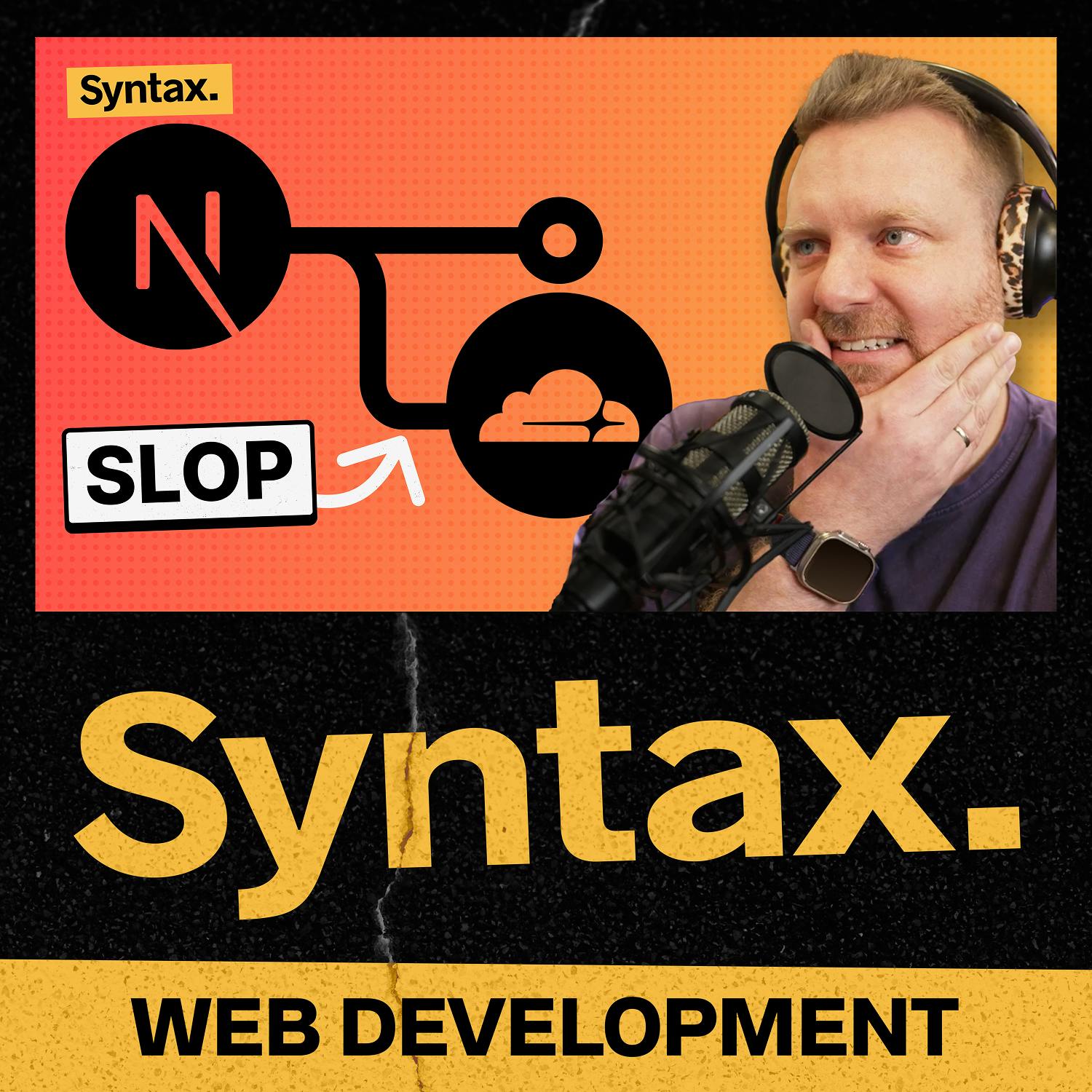
Cloudflare's vNext, a Vite-based Next.js fork, leveraged AI for rapid prototyping and iterative feedback to address porting challenges, while exploring AI's transformative potential in development workflows and framework transitions.
Wes and Scott talk with Steve Faulkner about vinext, a Vite-powered Next.js fork. They dive into AI coding workflows, agent browsers, code quality, an...
The podcast discusses the development of vNext, a fork of Next.js onto Vite created by Cloudflare, described as a "slop fork" to emphasize the process of porting the framework rather than the controversy surrounding it. Steve Faulkner, a Cloudflare engineering director, explains the projects motivations, including the challenges of hosting Next.js on non-Node/Vercel environments and the limitations of prior attempts to build custom compilers. The fork leveraged AI for rapid prototyping, enabling quick experimentation with Next.js on Vite through code generation, task planning, and collaboration with tools like OpenCode Opus. Key challenges included adapting Next.jss large test suite to Vites ecosystem while filtering out outdated tests and using AI to guide the alignment of tests with Vites framework. The projects success was marked by a pivotal demo of the app router, despite initial imperfections.
The discussion also highlights AIs growing role in software development, framing it as an "application factor" that accelerates progress when goals are clear but risks amplifying errors. Steve uses AI for managerial tasks like summarizing meetings and tracking workflows, emphasizing iterative refinement over reliance on prompts alone. Technical workflows involved tools like Markdown for planning, OpenCode Opus for coding, and voice-to-text tools for brainstorming. The team prioritized flexibility, acknowledging that while AI-generated code often prioritizes compatibility over quality, iterative refactoring and guardrails like linting and security audits help maintain standards. Challenges included non-determinism in AI outputs, errors in generated code, and the need for manual intervention to resolve issues like infinite loops or context compaction failures. Future directions emphasized AIs potential to reshape development practices, from framework transitions to security testing, while balancing excitement with caution about ethical and practical risks.
9 Sept 2026 1037: WebMCP is here (and you should care)
"WebMCP enables AI agents to interact directly with web apps via browser-based protocols, improving efficiency, security, and collaboration across platforms."
5 Aug 2026 1027: The Rise of the Design Engineer
"Design engineers merge creativity and technical skills to build functional solutions, facing biases in tech while emphasizing human judgment over AI-generated aesthetics, environmental concerns, and practical coding tips."
29 Jul 2026 1025: The Open Web's second chance (w/ Dan Abramov)
"ATProto is a decentralized data layer enabling users to own and control their data across apps, solving walled gardens and interoperability issues with a standardized, JSON-based system and web-native identity."
22 Jul 2026 1023: Mosh, Caddy & Tailscale: A Remote Dev Deep Dive
"Remote development workflows offer benefits like continuous processing and multi-device access but face challenges like rogue processes and secure local environment exposure, with tools like Tmux, Herder, and Tailscale discussed for managing sessions and networking."
20 Jul 2026 1022: Bun re-written in Rust, Zig team big mad
"TypeScript 7.0 delivers a 10x speed boost, network upgrades include 2G speeds and SFP fiber, AI updates cover GPT 5.6 and Grok concerns, while tech news highlights acquisitions, language releases, and personal tech setups."