9 Sept 2026 1037: WebMCP is here (and you should care)
"WebMCP enables AI agents to interact directly with web apps via browser-based protocols, improving efficiency, security, and collaboration across platforms."
More Syntax - Tasty Web Development Treats episodes
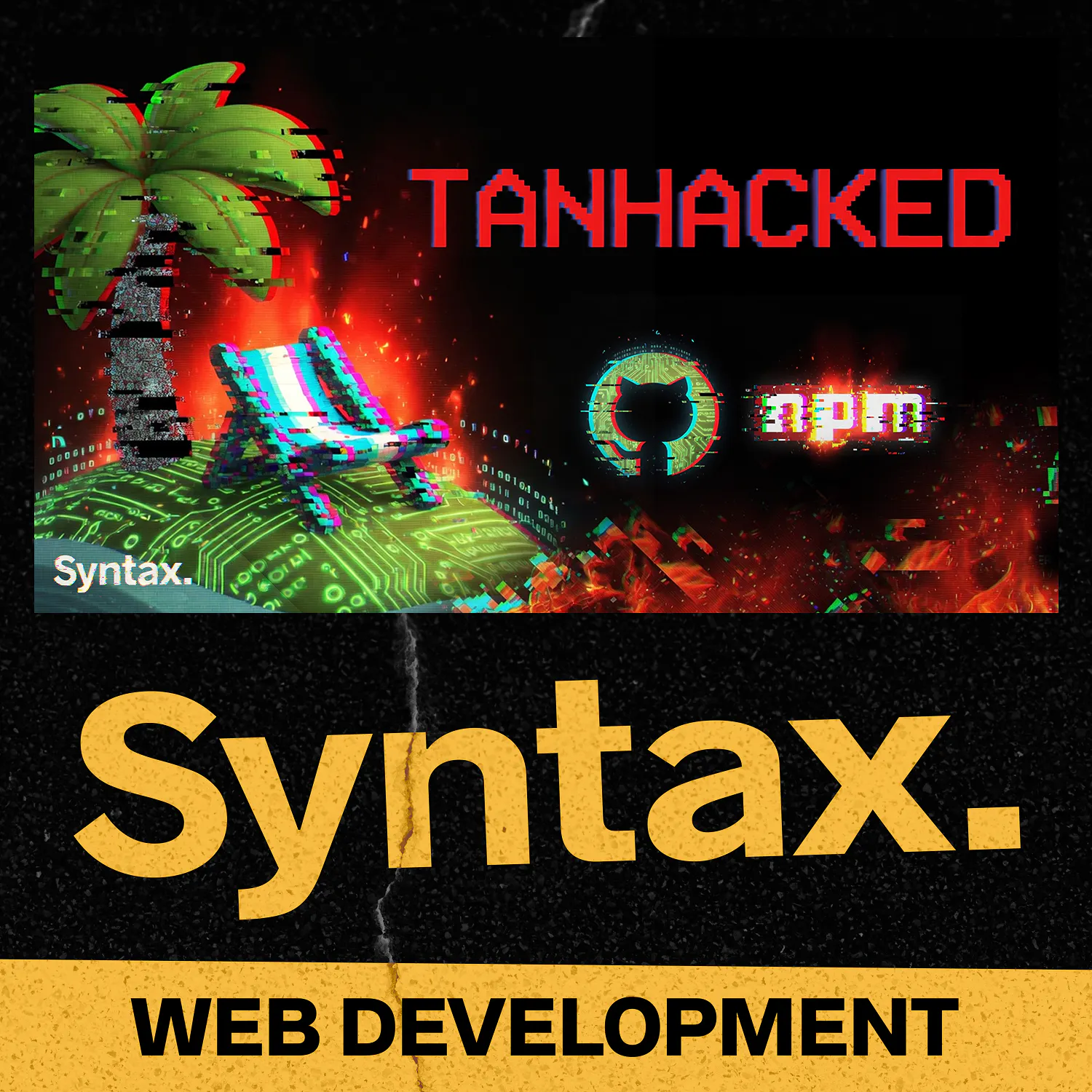
Published 13 May 2026
Recommended: Time to harden your applications.
Duration: 00:23:25
Cybersecurity threats like the "Shy Halood" worm series exploit supply chain vulnerabilities in GitHub Actions, pnpm, and token theft across NPM, Python, and UIPath ecosystems, emphasizing mitigation through workflow audits, dependency checks, tools like Socket.dev, and stricter package manager practices to counter credential theft and destructive attacks.
Scott and Wes break down the Mini Shai-Hulud supply chain attack that compromised TanStack and other popular npm packages through a clever GitHub Acti...
The text details a series of supply chain attacks, including the Shy Halood worms, which targeted multiple tech companies and platforms such as NPM, PyPy, and Postman. These attacks exploited vulnerabilities in development ecosystems, such as GitHub Actions shared caches and PNPM store dependencies, to inject malicious code into legitimate package repositories. The worms leveraged post-install scripts to steal data and credentials, particularly OIDC tokens, and were designed to self-propagate across interconnected packages. A related vulnerability, Mistral, infected auto-running scripts in applications like VS Code and Claude to harvest AWS credentials and seek additional resources. The attacks highlight the growing risks of supply chain exploits, emphasizing the need for robust security practices in software development workflows.
Key security implications include the exploitation of misconfigured GitHub Actions and the inadequacy of current NPM security measures, which rely heavily on 2FA without proactive scanning. Mitigation strategies involve avoiding GitHubs pull_request_target workflows, auditing dependencies, and utilizing tools like PNPM, Socket.dev, and Step Security to detect malicious patterns. The Shy Halood worms also included a Dead Man Switch that could self-destruct user data if GitHub tokens were revoked, underscoring the stealthiness of such threats. The discussion also critiques the lack of standardized security features in package managers like NPM, which allow dependencies from external sources, increasing vulnerability risks.
Broader challenges include the need for stronger security defaults in package management tools, such as PNPMs restrictions on external dependencies, and the risks of users unknowingly granting permissions during package installations. Recommendations stress the importance of regular dependency reviews, cautious use of third-party tools, and adopting secure practices like dev containers for sandboxed processes. The text underscores the evolving nature of supply chain attacks and the necessity of proactive measures to protect open-source ecosystems, while questioning the effectiveness of current industry practices and the role of AI/ML in future threat detection.
Here are some key insights and takeaways from the text, along with their potential relevance and usefulness to readers:
Key Insights:
Relevance and usefulness to readers:
Actionable recommendations:
Overall, the text provides a comprehensive overview of the current state of supply chain attacks, package manager security, and best practices for mitigating risks in software development ecosystems.
9 Sept 2026 1037: WebMCP is here (and you should care)
"WebMCP enables AI agents to interact directly with web apps via browser-based protocols, improving efficiency, security, and collaboration across platforms."
5 Aug 2026 1027: The Rise of the Design Engineer
"Design engineers merge creativity and technical skills to build functional solutions, facing biases in tech while emphasizing human judgment over AI-generated aesthetics, environmental concerns, and practical coding tips."
29 Jul 2026 1025: The Open Web's second chance (w/ Dan Abramov)
"ATProto is a decentralized data layer enabling users to own and control their data across apps, solving walled gardens and interoperability issues with a standardized, JSON-based system and web-native identity."
22 Jul 2026 1023: Mosh, Caddy & Tailscale: A Remote Dev Deep Dive
"Remote development workflows offer benefits like continuous processing and multi-device access but face challenges like rogue processes and secure local environment exposure, with tools like Tmux, Herder, and Tailscale discussed for managing sessions and networking."
20 Jul 2026 1022: Bun re-written in Rust, Zig team big mad
"TypeScript 7.0 delivers a 10x speed boost, network upgrades include 2G speeds and SFP fiber, AI updates cover GPT 5.6 and Grok concerns, while tech news highlights acquisitions, language releases, and personal tech setups."