14 Aug 2026 Day 5 of 100: Going Full Ironman Mode on an AI Product
"Explores AI-driven product development, a 100-day PLG challenge, and strategies for achieving ambitious goals through discipline, collaboration, and structured planning."
More ProductLed Podcast episodes
Published 16 Jun 2026
Duration: 00:52:33
Validation-driven product development prioritizes revenue as the key market demand indicator, emphasizing rapid iteration, platform integration, influencer partnerships, and overcoming challenges like dependency management and AI simplicity while learning from past failures and aligning with long-term growth goals.
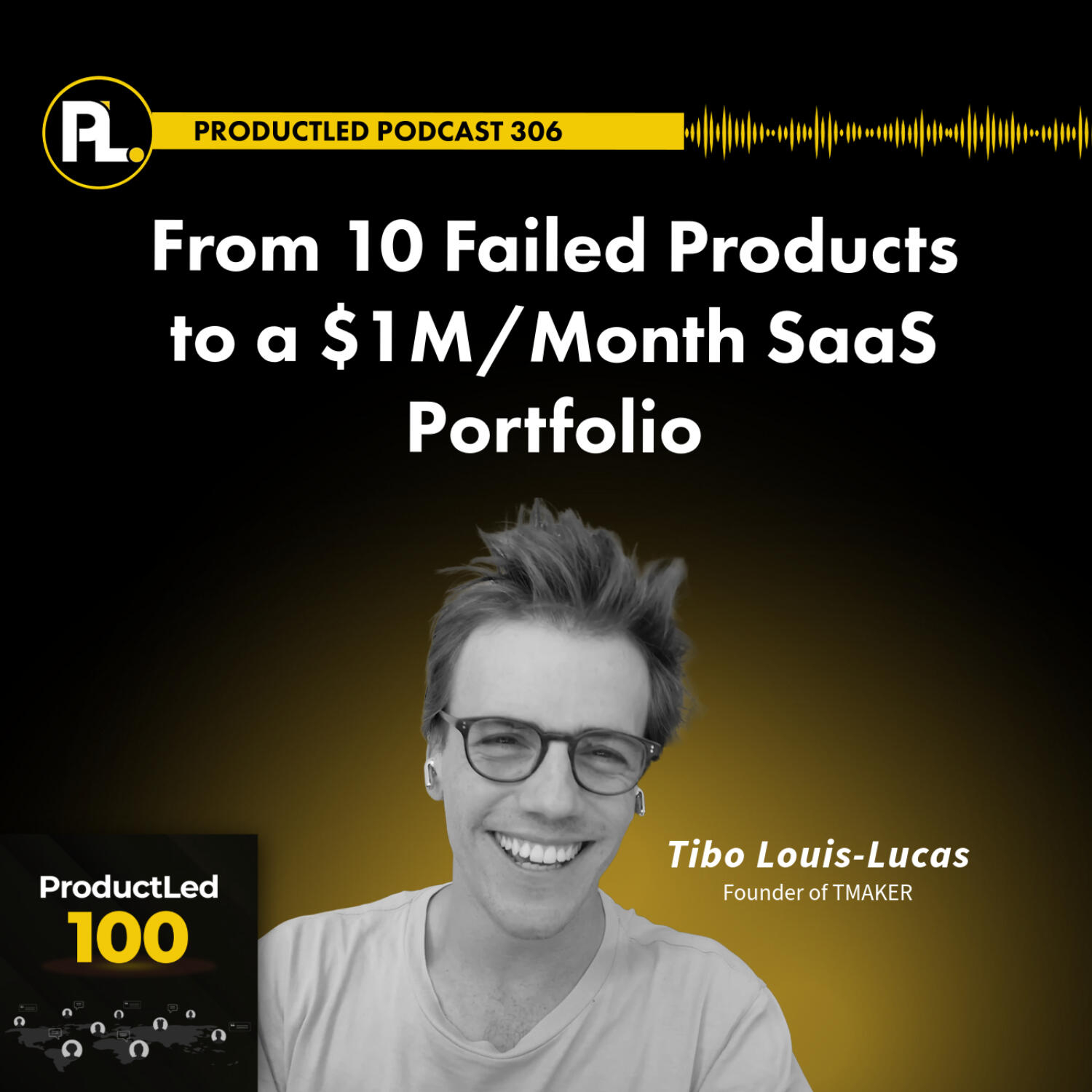
After spending years building unvalidated products that went nowhere, Tibo Louis-Lucas completely changed how he approached startups. In this episode...
The podcast discusses key lessons from product development, emphasizing the importance of validation-driven approaches and revenue-centric strategies. The speaker reflects on past failures, such as spending years on unvalidated products, and outlines a rule to avoid prolonged work on untested ideas. Success stories include products like Tweet Hunter, which achieved $300K monthly revenue before being sold, and the broader focus on revenue as a critical validation metric over user numbers or engagement. The text highlights the pitfalls of freemium models without clear monetization, advocating instead for products built with paying users to ensure feedback aligns with value creation. Strategies like deep platform integration (e.g., focusing on Twitter or LinkedIn) and influencer partnerships with profit-sharing models are presented as effective methods for distribution and growth.
The discussion also covers portfolio building, including rapid iteration, validating ideas, and aligning distribution partners as stakeholders. Challenges in exits are noted, such as platform dependencies and high churn, which complicate long-term commitments. The speaker critiques traditional exit strategies, instead favoring a mindset of building diversified product portfolios tailored to niche audiences (e.g., solo founders). There is a strong emphasis on product-led growth, with AI playing a growing role in automating development tasks but also creating challenges in balancing feature innovation with simplicity. The text underscores the importance of time management, prioritizing deep work over meetings, and maintaining focus on customer-driven improvements rather than distractions. Finally, the speaker advocates for embracing failure as part of the process, using iterative testing and feedback to refine offerings and avoid "wasting" time on unproven concepts.
What if you launched a product that requires early revenue validation before investing more time?
What if you partnered with a niche influencer to co-own and distribute your next product?
What if you built an AI-powered product feedback loop to prioritize paid-user needs?
Prioritize revenue validation over user metrics: Validate product ideas by achieving early revenue (e.g., $1,000+ monthly recurring revenue) instead of relying on user numbers or engagement. Focus on building products that solve immediate problems for paying customers, not just freemium users.
Avoid freemium traps by targeting paid users first: Build products with a clear monetization strategy from the start. Use pricing transparency during onboarding and avoid relying on free users (who often skew feedback) to ensure your product meets the needs of high-value, paying customers.
Leverage influencer partnerships with profit-sharing models: Partner with influencers or aligned individuals and offer them non-binding incentives (e.g., 25% monthly profit shares or equity) to drive distribution. Structure agreements to align their audience with your target market for organic growth.
Adopt rapid iteration and validation-driven product development: Ship one product per week, test ideas quickly, and eliminate unvalidated concepts. Use stealth mode development with direct user feedback (e.g., DMs) to refine workflows and avoid wasting time on unproven concepts.
Build scalable systems for portfolio management: Automate repetitive tasks (e.g., product analytics, updates) with tools like Mission Control HQ and consolidate dashboards to monitor metrics across multiple products. Focus on creating repeatable systems rather than manually managing each product.
14 Aug 2026 Day 5 of 100: Going Full Ironman Mode on an AI Product
"Explores AI-driven product development, a 100-day PLG challenge, and strategies for achieving ambitious goals through discipline, collaboration, and structured planning."
26 May 2026 No Sales Call Required: Roeland Delrue on Scaling Aikido to a Cybersecurity Unicorn
Akido, a European cybersecurity firm, leverages a product-led growth model with a freemium GitHub-integrated approach to secure cloud code, achieving a $1B valuation quickly by prioritizing developer experience, AI-driven tools, and transparency while challenging traditional security sales models and addressing industry shifts toward integrated, AI-enhanced platforms.
15 May 2026 The Mutiny Pivot: Why Jaleh Rezaei Shut Down an 8-Figure SaaS to Go All-In on AI
A strategic pivot from SaaS to AI-driven solutions emphasizes rapid decision-making, M-braining frameworks, and prioritizing speed over incremental growth, resulting in 12x MRR growth through streamlined teams, AI infrastructure focus, and balancing automation with human judgment.
8 May 2026 $5M ARR, 2 People, $100M Exit How Jeremy Clarke Did it, and What He is Building Next
A bootstrapped SaaS company, Webmerge, scaled to $5M ARR by targeting a niche market, leveraging word-of-mouth, SEO, and partnerships, but faced scaling challenges leading to its sale, while the founder navigates new AI product hurdles, emphasizing niche positioning, integration strategies, and the tension between free access models and sustainable growth.
24 Apr 2026 Built on a Crisis: Jeff Wang on Winning Enterprise AI Coding with Windsurf
AI tool adoption struggles with low engagement and market saturation, emphasizing human differentiation, Windsurf's AI innovations, enterprise growth strategies, niche market focus, and aligning product development with user needs amid stiff competition.