More Lenny's Podcast: Product, Career, Growth episodes

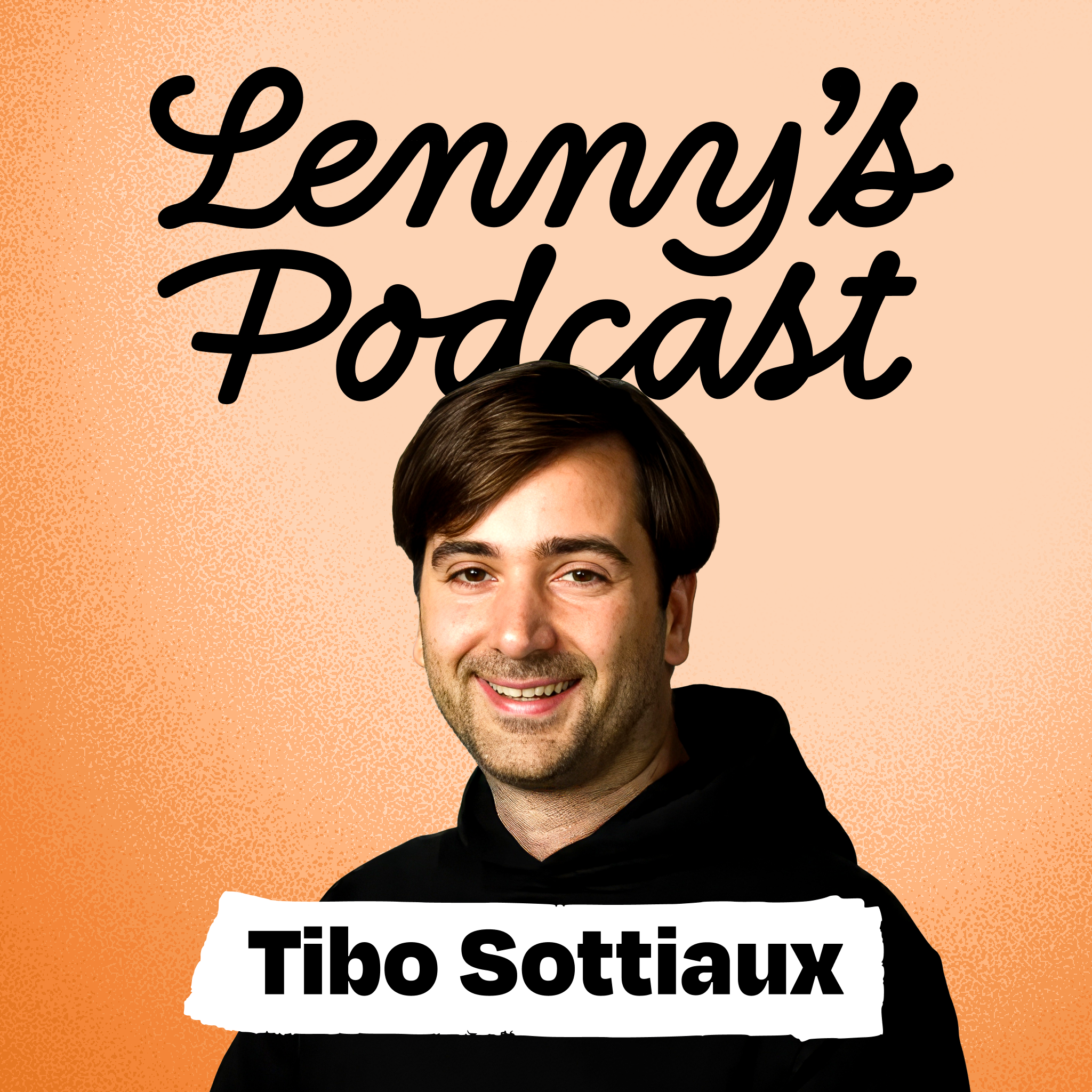
OpenAIs Head of ChatGPT: Were entering a new era of AI (again) | Tibo Sottiaux thumbnail

OpenAIs Head of ChatGPT: Were entering a new era of AI (again) | Tibo Sottiaux

Published 4 Oct 2026

Duration: 00:37:23

"Explores AI-driven workflows, autonomous agents, seamless goal-oriented systems, and the future of human-AI collaboration in work and creativity, emphasizing scalability, user feedback, and intuitive interfaces."

Episode Description

Tibo Sottiaux leads ChatGPT and Codex at OpenAI. Under his stewardship, OpenAI has shipped some of its most consequential consumer launches: Codex, Ch...

Overview

The podcast discusses the evolving role of AI in work and daily life, emphasizing a future where AI agents autonomously perform tasks across the internet. Current AI systems, though still clunky, are moving toward seamless, autonomous operation that understands user goals, preferences, and feedback without requiring manual configuration. The vision includes persistent, intelligent agents that integrate naturally across devices and contexts - such as meetings, emails, and messaging - anticipating needs and reducing friction in both productivity and creativity.

A major focus is on designing products for an agent-driven world, where scalability and enterprise integration (e.g., SSO, audit logs) are essential. The speaker highlights tools like DOTS and platforms such as Work OS that aim to unify AI capabilities into intuitive, user-friendly systems, minimizing model selection and setup. There's strong emphasis on human-AI collaboration, with AI acting as an extension of human will rather than a replacement, supporting builders through faster iteration, multimodal interaction, and shared workspaces. User feedback, safety, alignment, and responsible development are seen as critical to ensuring AI remains beneficial, accessible, and aligned with human values at scale.
What If

  • What if you designed your SaaS to serve AI agents as primary users?

    • Move: Refactor your API and product workflows to support high-frequency, stateful interactions from autonomous AI agents (e.g., batch processing, event hooks, agent-specific rate limits). Prioritize machine-readability in responses and adopt standardized schemas.
    • Why Now?: The shift toward agent-driven internet activity is accelerating - products not optimized for non-human users will face scalability issues and integration friction as companies like OpenAI and Anthropic deploy agent teams at scale.
    • Expected Upside: Gain early-mover advantage in the agent economy; attract enterprise clients building on platforms like Work OS that demand agent-ready infrastructure, increasing stickiness and usage volume.
  • What if you replaced your daily coding routine with AI-generated code + targeted hand-coding sprints?

    • Move: Use AI (e.g., Codex-level tools) to generate 90% of your production code, reserving manual coding only for critical path logic or "therapeutic" deep-focus sessions (e.g., 1 - 2 hours/week for architecture or innovation). Treat yourself as a builder, not a typist.
    • Why Now?: Ultra-fast models now reduce latency enough to make real-time AI collaboration practical, and the frontier has shifted from writing code to shaping intent, taste, and system design - skills where humans add unique value.
    • Expected Upside: Multiply output speed by 3 - 5x, free up cognitive bandwidth for higher-level product decisions, and align with the emerging "builder" paradigm where success comes from direction, not keystrokes.
  • What if you launched a plugin into an open AI platform using only user feedback to guide iteration?

    • Move: Build a minimal but useful plugin for an open ecosystem (e.g., Chatchapiti or DOTS), then deploy it to a small user cohort and track retention, feature usage, and organic sharing - not vanity metrics. Iterate weekly based solely on behavioral data and direct messages.
    • Why Now?: Platforms are actively rewarding high-retention plugins with distribution and revenue share, and the bar for entry is low due to improved tooling (APIs, auth via Sign-In with Chantrapati, memory-aware backends).
    • Expected Upside: Achieve product-market fit faster through tight feedback loops, earn platform-backed visibility, and position for acquisition or monetization as the ecosystem scales - mirroring successful indie developer paths seen in early App Store or Chrome Extension eras.

Takeaway

  • Design your software with agent-scale usage in mind by ensuring APIs and systems can handle automated, high-volume interactions from AI agents, not just human users.
  • Build feedback loops into your product early to rapidly iterate based on real user behavior, treating initial versions as imperfect prototypes that evolve through community input.
  • Develop a plugin or extension for an open AI platform focusing on solving a specific, high-utility problem, aiming for strong retention and organic distribution through quality rather than marketing.
  • Simplify your user interface by reducing model selection and configuration choices, moving toward a single, intelligent default that adapts automatically to user needs.
  • Use AI tools like Codex or similar code-generation models daily to accelerate development, reserving hand-coding only for critical or personally meaningful components.

Recent Episodes of Lenny's Podcast: Product, Career, Growth

8 Sept 2026 How we built Grok Bot in a month | Roman Ugarte (SpaceXAI)

"AI-powered assistant Grokbot automates work and personal tasks, acting as a collaborative colleague, with cloud-based access, natural language automation, and a focus on simplicity and reliability, aiming to integrate deeper into workflows for proactive task management."

More Lenny's Podcast: Product, Career, Growth episodes