6 Mar 2026 Leading Beyond the Framework with Richard Hughes-Jones
Leaders must prioritize adaptive skills and integrate AI tools with human judgment to navigate uncertain environments and improve decision-making.
More Refactoring Podcast episodes

Published 20 Mar 2026
Duration: 00:51:37
The evolution from traditional IDEs to intent-driven environments like **Intent** streamlines AI agent orchestration, addresses synchronization and legacy system challenges, and promotes collaborative workflows, role specialization, and interdisciplinary approaches to redefine software development success through adaptability and iterative processes.
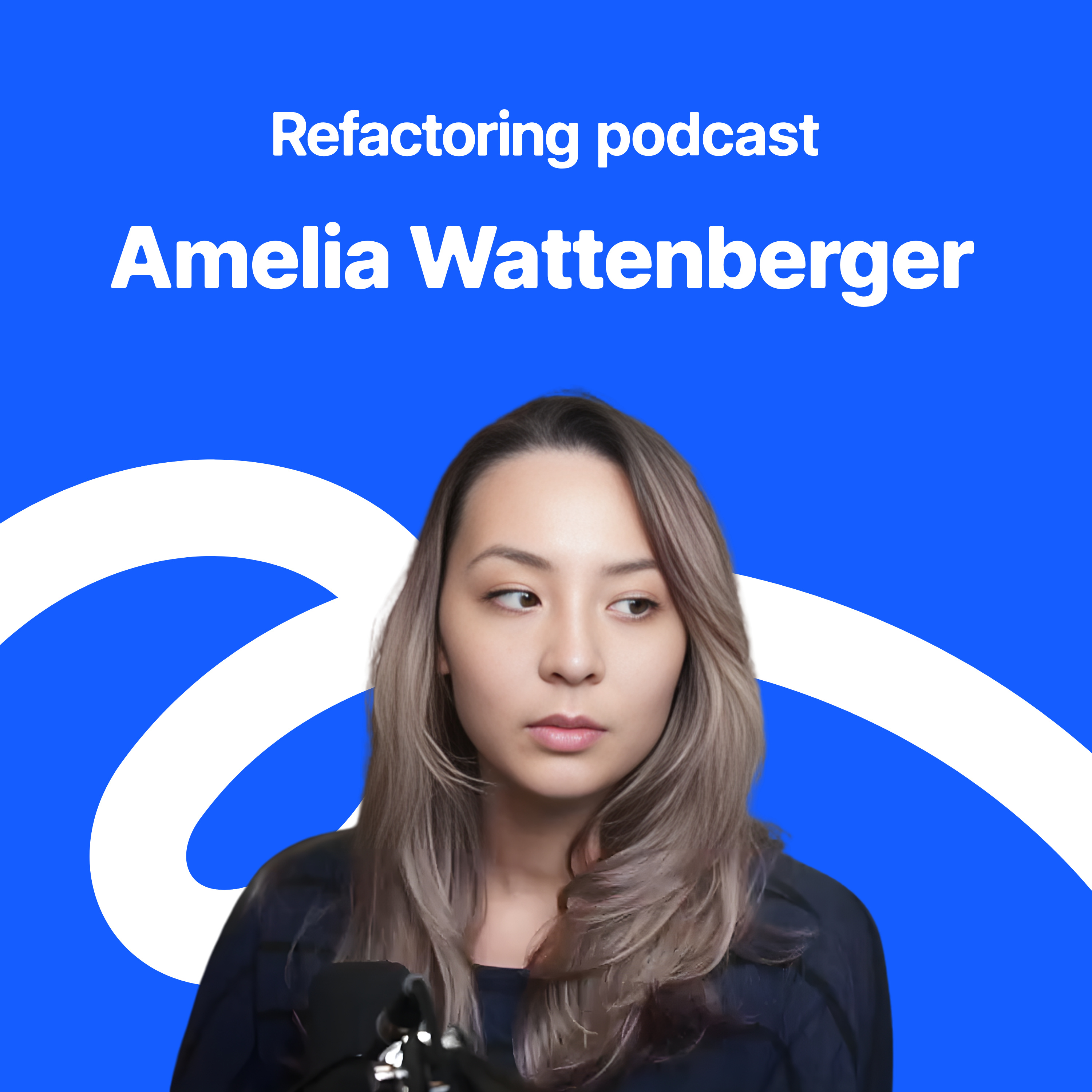
Today's guest is Amelia Wattenberger, former principal research engineer at GitHub and now partner at Sutter Hill Ventures.But she's also a product le...
The podcast discusses the evolution of software development tools and practices, emphasizing a shift from traditional IDEs to more abstracted, AI-driven environments. A central focus is Intent, a workspace-based tool developed by Amelia Wattenberger, which aims to simplify development by prioritizing high-level intentions over low-level code manipulation. Key features include isolated workspaces, task-specific collaboration tools, and rich markdown integration, addressing limitations of rigid IDEs and improving AI agent coordination. The design philosophy advocates for opinionated structuressuch as task-focused collaboration and shared specificationsto reduce complexity and streamline workflows. This approach contrasts with legacy systems, positioning AI as a catalyst for redefining roles in development, where humans act as planners while agents handle execution.
The discussion highlights broader trends, such as the growing reliance on AI agents for task delegation and the need for tools that support seamless agent orchestration. Challenges include ensuring synchronization between agents and overcoming skepticism around AIs role in traditionally "sacred" domains like IDE development. Spec-driven workflows are reimagined as dynamic, evolving documents that guide agent actions and adapt in real time, replacing static, version-controlled specifications. The conversation also explores the changing landscape of job roles, with a move toward hybrid professionals who blend design, product, and technical expertise. Additionally, it touches on the importance of reducing cognitive load through AI-generated options and the need for smart defaults to ease onboarding, while emphasizing that adaptability and mindset are critical for navigating the evolving field. Collaborative models, such as specialized agent roles (coordinator, implementer, verifier), are presented as a way to enhance accuracy and efficiency, particularly in parallelized workflows.
6 Mar 2026 Leading Beyond the Framework with Richard Hughes-Jones
Leaders must prioritize adaptive skills and integrate AI tools with human judgment to navigate uncertain environments and improve decision-making.
20 Feb 2026 How to Master Behavioral Interviews with Austen McDonald
Behavioral interviews are becoming essential in the tech industry for assessing candidates' leadership abilities, soft skills, and potential for long-term success.
6 Feb 2026 Building Apps with Your Voice with Paige Bailey
Software engineering is evolving as AI reduces development friction, shifts focus from coding to guiding AI, and enables rapid prototyping, deployment, and potential innovation in less appreciated industries.
23 Jan 2026 How Todoist is Built with Goncalo Silva
Artificial intelligence is transforming collaborative work and development practices, enabling direct team collaboration and integration into daily operations, with successful companies adapting through prioritized product strategies and evolving team dynamics.
9 Jan 2026 Career Sabbaticals and Self Discovery with Thiago Ghisi
An individual's journey of leaving a career in engineering to focus on personal growth, self-discovery, and exploring intellectual interests.