More Latent Space episodes

Giving Agents Computers  Ivan Burazin, Daytona thumbnail

Giving Agents Computers Ivan Burazin, Daytona

Published 21 May 2026

Duration: 01:10:27

A company evolved from pre-Docker browser-based IDEs and developer events to modern sandboxing platforms prioritizing AI agent infrastructure, leveraging bare-metal compute for scalability and addressing market demands with open-source strategies, spiky workloads, and future AI Cloud expansion amid GPU shortages.

Episode Description

Take the 2026 AI Engineering Survey and get >$2k in credits and AIE WF tickets!On the product side, everyone is getting Computer - Perplexity, Manus,...

Overview

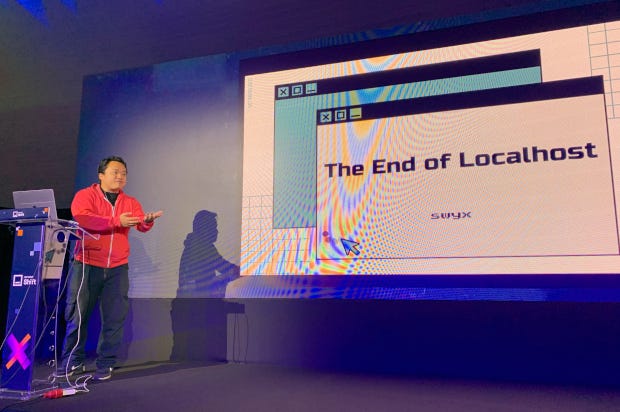
The podcast details the evolution of a tech company through multiple product cycles, starting with Code Anywhere, a browser-based IDE developed in the early 2000s, which later pivoted to a developer conference called Shift. The company then transitioned to Daytona, a platform focused on automating development environments that evolved into sandbox-based solutions tailored for AI agents and non-human workloads. Technological innovations highlighted include the foundational infrastructure built pre-Docker/Kubernetes, which informed Daytonas modern approach to fast, stateful sandboxes, emphasizing speed, scalability, and reduced latency through custom scheduling and bare-metal solutions. The shift to sandboxes was driven by insights from AI tools like Devin and market demand for agent-centric infrastructure, contrasting with traditional systems like Kubernetes, where Daytona aims to merge the speed of serverless computing with the persistence of virtual machines. Performance benchmarks underscored Daytonas capacity to handle high concurrency, while challenges included managing spiky workloads, GPU utilization, and regional AI adoption trends, particularly in Asia and Europe.

Market dynamics emphasized rapid growth in compute and AI infrastructure, with Daytona leveraging product-led growth (PLG) and enterprise adoption. The companys pivot was influenced by early blog posts and industry engagement, positioning it as a leader in redefining compute primitives for AI agents, such as composable environments and specialized databases. Technical differentiation included security through Sysbox-hardened Docker and open-source strategies that balanced community adoption with proprietary features. Workloads were categorized as either background agents (human-like activity patterns) or short, variable tasks, requiring flexible resource allocation. Challenges included capacity planning for unpredictable demand, legacy system integration, and the limitations of Mac OS sandboxing due to licensing and performance bottlenecks. The discussion also explored broader implications, such as the potential for an AI Cloud ecosystem and the evolving role of infrastructure models in supporting agent workflows, while acknowledging risks in overestimating the value of AI-driven growth.
What If

  • What if you pivoted your software business from a product to a developer-focused virtual event platform like Shift?
    Concrete move: Organize a monthly virtual summit for solo developers, using your existing community/feedback channels to host talks on AI agents, sandboxing, and infrastructure.
    Why now: The market for developer events is growing (e.g., Daytonas rebranding to composable computers for AI agents), and solo operators can leverage low-cost virtual tools to scale without physical overhead.
    Expected upside: Build a loyal developer audience, generate affiliate revenue from sponsorships (e.g., tool vendors like Cloud Code or Anthropic SDKs), and position yourself as a thought leader in niche AI/infra topics.

  • What if you built a lightweight, open-source sandbox tool for AI agents inspired by Daytonas performance?
    Concrete move: Develop a CLI-based sandbox that spins up isolated environments in under 60 milliseconds using preloaded templates (similar to Daytonas bare-metal approach).
    Why now: The compute market is growing 74% MoM, and AI agents require fast, stateful sandboxes for testing.Your solo workflow can iterate rapidly without enterprise overhead.
    Expected upside: Attract developers needing quick testing cycles, generate PLG traction via GitHub stars, and potentially license your tool to startups or integrate it into larger platforms (e.g., as an SDK for agent-driven apps).

  • What if you adopted an open-core strategy like Daytona to fuel enterprise adoption while retaining community support?
    Concrete move: Release your core sandboxing infrastructure as AGPL 3 open source, while monetizing advanced features (e.g., GPU acceleration, enterprise-grade security) via paid tiers.
    Why now: Open source is a proven PLG driver (e.g., Daytonas GitHub adoption), and the AI agent market is hungry for reliable, scalable tools. Enterprises will pay for enterprise-specific features.
    Expected upside: Fast adoption via community virality, enterprise contracts for premium features, and reduced competition by limiting direct forks of your core codebase.

Takeaway

  • Pivot Based on User Feedback and Market Gaps: Actively gather user insights and market trends to identify unmet needs (e.g., transitioning from human-centric dev tools to AI agent sandboxes) and reorient your product roadmap accordingly, as seen in Daytonas pivot from Code Anywhere.
  • Leverage Custom Infrastructure for Performance: Build or adopt lightweight, bare-metal-based solutions with custom scheduling to achieve low-latency, stateful environments (e.g., Daytonas design) tailored for AI agents or spiky workloads.
  • Adopt a Hybrid Open-Core Licensing Model: Release core functionality under a permissive open-source license (e.g., Apache 2.0) to build community trust, while restricting access to proprietary features via AGPL or enterprise licenses to protect revenue.
  • Optimize for Spiky Workload Patterns: Use over-provisioning or just-in-time compute strategies to handle unpredictable demand (e.g., RL training or researcher workloads), and prioritize fast instance spin-up times and dynamic resource scaling.
  • Build Community Through Third-Party Endorsements: Engage with developer communities and publish case studies to validate your products strengths (e.g., Daytonas adoption by terminal benchmark teams), leveraging user-driven credibility to attract enterprise clients.

Recent Episodes of Latent Space

20 May 2026 Railway: The Agent-Native Cloud Jake Cooper

Railway streamlines app deployment with AI-driven tools, environment cloning, and parallel testing, leveraging kernel patching and custom storage while addressing challenges like compute scarcity and AI agent coordination, alongside critiques of Git/GitHub and traditional software lifecycle practices.

5 May 2026 Doing Vibe Physics Alex Lupsasca, OpenAI

AI is advancing theoretical physics by rapidly solving complex problems like quantum field theory calculations and simulating models such as SYK, though it still relies on human collaboration for original insights and contextual validation, reshaping research methodologies and education.

23 Apr 2026 AIE Europe Debrief + Agent Labs Thesis: Unsupervised Learning x Latent Space Crossover Special (2026)

The text discusses AI's evolving landscape, focusing on experimental agents potentially breaking containment by 2026, market disruptions from foundation models, infrastructure advancements like RAG, debates between infrastructure and application firms, outsourcing strategies, pre-2023 training data advantages, competitive coding AI sectors, and future trends in personalization and industry transformation amid scalability and quality challenges.

More Latent Space episodes