17 Sept 2026 AI Skills with Matt Pocock
"Former voice coach turned developer shares insights on AI integration in software engineering, emphasizing fundamentals, adaptability, and structured workflows for productivity."
More The Pragmatic Engineer episodes
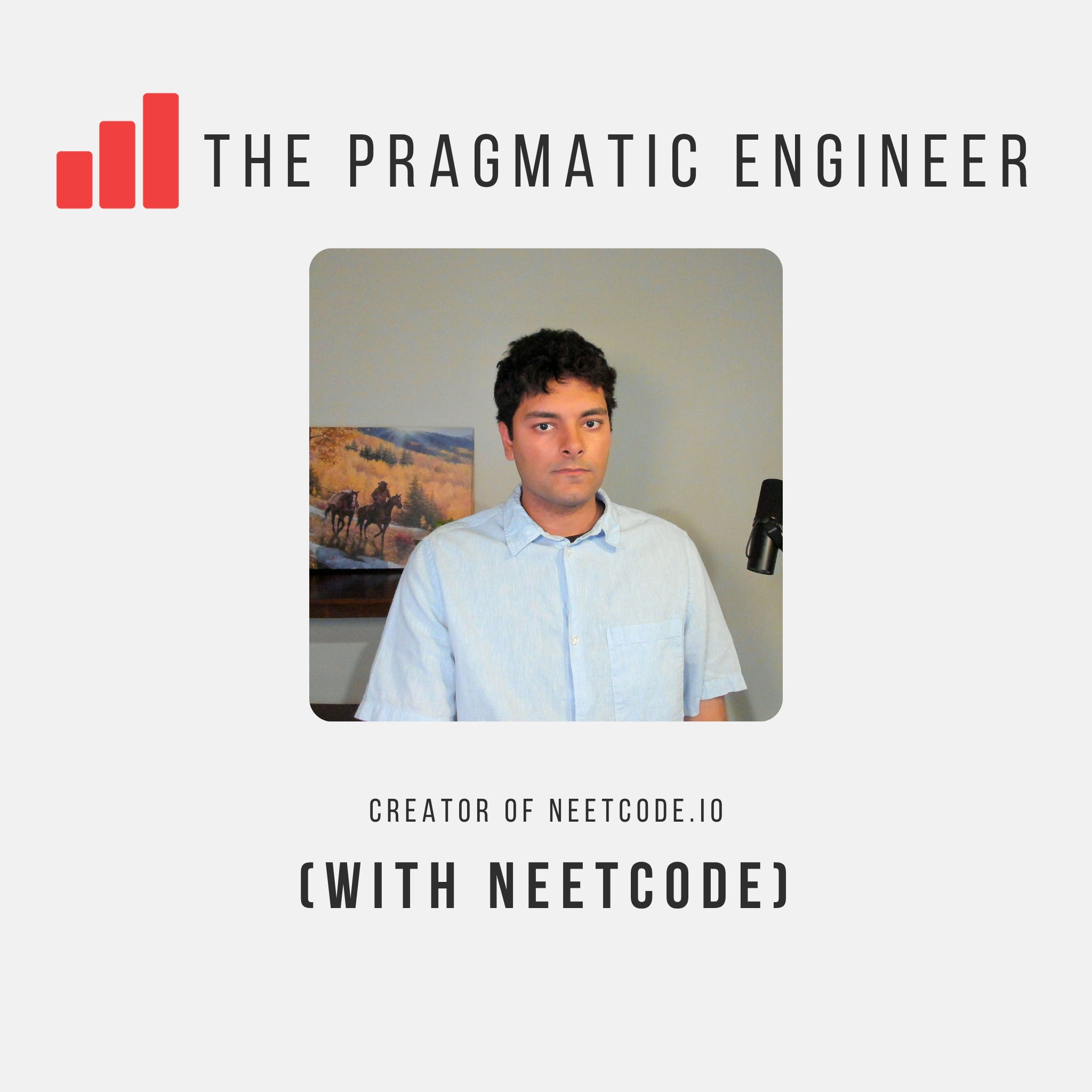
Published 24 Jun 2026
Duration: 01:29:09
Engineering careers are shifting from algorithm memorization to problem-solving and critical thinking amid AI's influence, critiquing outdated hiring practices, highlighting adaptation divides, trade-offs, cultural contrasts, and the enduring need for human-driven decision-making in tech.
Brought to You By:Antithesis verify your systems correctness without human review or traditional integration tests and avoid bugs or outages.Sentry ap...
The podcast explores evolving challenges and perspectives in engineering careers, AIs impact on technical skills, and the limitations of traditional hiring practices. It emphasizes the value of data structures and algorithms in developing practical job skills, though it critiques the overemphasis on rote memorization, advocating instead for critical thinking and problem-solving abilities. Discussions highlight a growing divide between engineers who adapt to AI tools and those who rely on them, with some arguing that a specific mindset is crucial for success in tech. The podcast also examines the relevance of coding interviews, noting their stagnation despite AIs ability to generate code, and critiques their failure to measure qualities like motivation or team compatibility. Compounding skillssuch as foundational programming knowledgeare contrasted with eroding ones, like those replaced by AI, while the CAP Theorems oversimplification and its limitations in real-world applications are scrutinized.
Personal experiences and industry insights reveal the tension between theoretical knowledge and practical application in software engineering. The transition from academic programming to real-world constraints, struggles with complex systems, and the "love-hate" relationship with coding are recounted. Work environments, particularly at companies like Amazon, are critiqued for intense cultures, poor mentorship, and attrition policies that pressure employees. In contrast, Googles collaborative culture and promotion processes are contrasted with Amazons intensity. The podcast also addresses broader themes: the importance of domain expertise in system design, the shift toward agentic coding, and the balance between speed and stability in software development. It questions whether AI will reduce demand for programmers, debates the role of open-source contributions in hiring, and reflects on the enduring need for human-driven decision-making and soft skills like adaptability and communication in an era of rapid technological change.
What if you repurpose AI tools to automate content creation but prioritize authenticity and relatability in your output?
What if you restructure your interview process to focus on problem-solving and communication skills rather than coding challenges?
What if you build a minimum viable product (MVP) using pragmatic tech choices and iterate based on user feedback rather than chasing perfect architecture?
17 Sept 2026 AI Skills with Matt Pocock
"Former voice coach turned developer shares insights on AI integration in software engineering, emphasizing fundamentals, adaptability, and structured workflows for productivity."
9 Sept 2026 Building Codex with Tibo Sottiaux
"Explores Codex's AI-powered coding assistant development, Rust's role, open-source benefits, AI's impact on software workflows, and the future of AI-assisted problem-solving."
26 Aug 2026 Why performant code matters (but gets widely ignored), with Casey Muratori
"Performance optimization in software hinges on early architectural decisions, deep system knowledge, and avoiding premature abstraction, with historical and modern challenges shaping its evolution."
19 Aug 2026 From Chrome DevTools to AI Engineering, with Addy Osmani
"AI is reshaping software engineering by automating coding tasks, while adaptability, leadership, and lifelong learning remain key to thriving in the evolving tech landscape."
12 Aug 2026 Stop being skeptical about AI for development with Charity Majors
"AI's impact on software engineering is reshaping code review, reliability, and career paths, demanding new verification methods, ethical accountability, and adaptability in a rapidly evolving field."