More Latent Space episodes

We have foundation models for language, not for physics  Anima Anandkumar, Bren Professor of Computing thumbnail

We have foundation models for language, not for physics Anima Anandkumar, Bren Professor of Computing

Published 26 Aug 2026

Duration: 01:23:31

"AI revolutionizes weather modeling with faster, accurate forecasts, extends to climate predictions, plasma physics, and fusion research, while emphasizing democratized access and principled AI for scientific discovery."

Episode Description

A few years ago, Caltech Prof. and co-founder of Accelerated Understanding, Anima Anandkumar set out to develop the first open-source weather model wi...

Overview

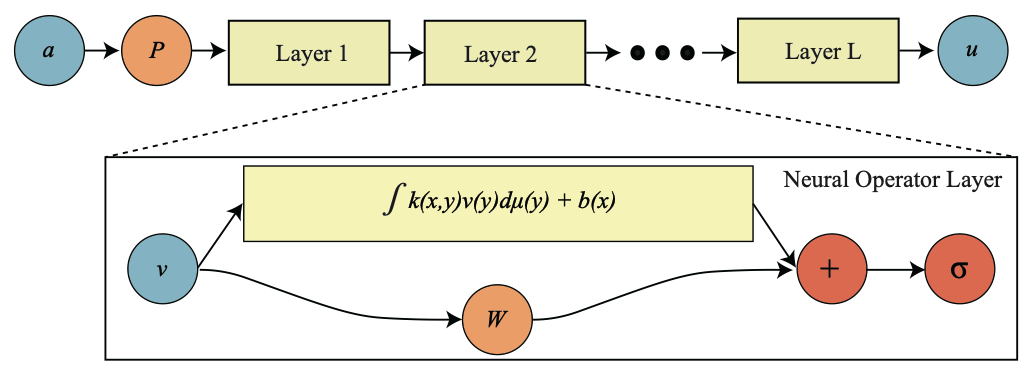
The podcast discusses the application of AI, particularly neural operators, in modeling complex physical systems like weather and climate. Traditional physics-based forecasting methods, while accurate, are computationally expensive and require supercomputers. AI models, especially those using Fourier neural operators, achieve comparable accuracy but operate orders of magnitude faster and can run on consumer-grade GPUs. A key advancement is the integration of Earth's spherical geometry into models like ForecastNet 3, enabling accurate long-term climate predictions and making AI the first emulator capable of both short-term weather and sub-seasonal to climate forecasting. These models are trained on global data, allowing strong generalization across diverse regions, and support ensemble-based probabilistic forecasting, improving predictions of extreme events like hurricanes.

Beyond weather, AI is being applied to other scientific domains governed by differential equations, such as fusion energy, materials science, and carbon sequestration. Neural operators enable digital twins of fusion reactors, simulating plasma dynamics millions of times faster than traditional methods, aiding in disruption prediction and control. To ensure reliability, frameworks like Torch Lean provide formal verification of AI models, enforcing physical constraints and robustness in safety-critical systems. The discussion emphasizes the need for principled AI that combines data-driven learning with physical laws, especially in data-scarce domains. Future directions include developing foundation models for physics, solving inverse design problems, and improving scalability and hardware efficiency to support high-resolution, multi-physics simulations.
What If

  • What if you built a physics-informed AI emulator for a high-cost simulation in your domain?

    • Move: Identify a slow, compute-heavy simulation (e.g., fluid dynamics, thermal modeling) used in your niche. Use open-source neural operator libraries (like Neural Operators in PyTorch) to train a fast surrogate model on public or synthetic data.
    • Why Now?: Consumer GPUs now enable training models that replace supercomputer-grade simulations (e.g., weather forecasting), and frameworks like Torch Lean are making verification tractable.
    • Expected Upside: Deliver 10,000x faster simulations as a differentiated SaaS product or API, undercutting traditional tools while maintaining scientific fidelity.
  • What if you launched a verified AI control module for a safety-critical system?

    • Move: Pick a small but risky control problem (e.g., drone stabilization, HVAC safety limits). Implement a neural controller and use formal verification tools (e.g., Torch Lean + Crown) to prove robustness bounds under real-world perturbations.
    • Why Now?: Formal verification of neural networks is now feasible for small models, and industries like energy or robotics increasingly demand certified AI behavior.
    • Expected Upside: Offer a drop-in, verifiably safe AI module that commands premium pricing in engineering markets wary of black-box AI.
  • What if you created a climate-grade forecasting API for underserved regions?

    • Move: Fine-tune an open weather model (e.g., ForecastNet) on global re-analysis data, incorporating spherical geometry to ensure long-term accuracy. Deploy it as a lightweight API for agriculture or disaster planning in the Global South.
    • Why Now?: AI weather models now match traditional accuracy at a fraction of the cost, and open models enable solo developers to bypass legacy infrastructure.
    • Expected Upside: Capture early market share in emerging markets where governments and NGOs need affordable, accurate climate tools - monetize via grants, API usage, or partnerships.

Takeaway

  • Adopt neural operator architectures, such as Fourier Neural Operators, to build fast, high-resolution models for physical systems like weather or fluid dynamics.
  • Integrate physics-informed constraints as loss functions in AI models to ensure outputs adhere to real-world laws, improving reliability in data-scarce domains.
  • Leverage open-source AI weather models (e.g., ForecastNet) and global datasets (e.g., ERA5) to develop accurate, low-cost forecasting tools without requiring supercomputing resources.
  • Use spherical geometry representations (e.g., spherical harmonics) in spatial models to improve long-term prediction stability, especially for planetary-scale phenomena.
  • Apply formal verification frameworks like Torch Lean to validate neural network behavior in safety-critical applications, ensuring robustness against perturbations and numerical errors.

Recent Episodes of Latent Space

24 Jun 2026 Why the Frontier Ecosystem must be Open Matei Zaharia and Reynold Xin, Databricks

Databricks' expansion from a Berkeley meetup to a 100,000-attendee event, coupled with initiatives like OmniGens, Open Sharing, and Genie, addresses agent interoperability, open data formats, cloud security, scalable analytics, and evolving database architectures, while emphasizing open ecosystems and customer-driven AI innovation.

22 Jun 2026 Red-Teaming after Mythos Zico Kolter & Matt Fredrikson, Gray Swan

AI security challenges in large language models, such as data leakage and prompt injection, require adversarial testing, red teaming, tools like *Shade* and *Signal*, and structured frameworks to address integration risks, robustness gaps, and enterprise-specific security demands.

3 Jun 2026 Scaling Past Informal AI - Carina Hong, Axiom Math

Formal verification is positioned as a critical tool for advancing AI by ensuring system correctness through mathematical rigor, exemplified by Axiom Math's achievements, tools like Lean, challenges in AI generalization, and the vision of AI as a "superhuman mathematician" through verified reasoning.

3 Jun 2026 Satya Nadella: No Priors x Latent Space Crossover Special at Microsoft Build

Strategic AI development shifts to ecosystem-driven frameworks prioritizing value creation, covering Microsoft's rigorous model training, agent-driven workflow management, real-world impact challenges, innovative business models, inclusive AI participation, and redefining work through agentic systems.

More Latent Space episodes