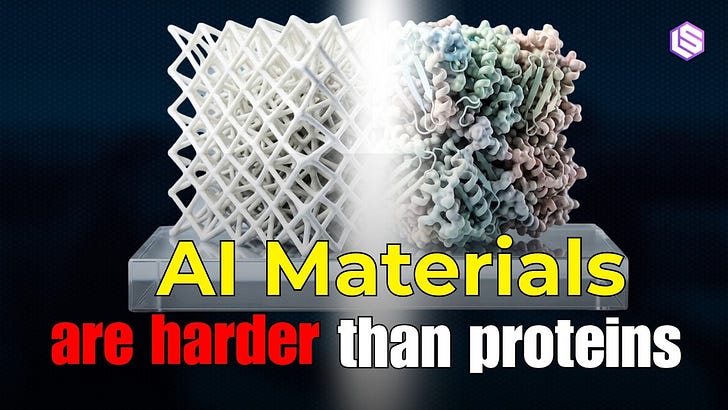
The podcast discusses the integration of AI in education and materials science, highlighting debates about whether tools like ChatGPT can replace traditional learning in fields such as chemistry and physics. While AI shows promise in accelerating materials discovery through machine learning (ML) and data-driven approaches, it faces limitations in generating complex molecular designs, such as ligands with precise atomic compositions. Heather Kuliks work emphasizes using ML to speed up materials prediction, exemplified by an AI-identified polymer four times tougher due to a quantum mechanical stabilization mechanism, validated experimentally. Key insights include AI uncovering novel chemical phenomena, like electron behavior during molecular breakdown, which traditional methods might miss. The discussion also addresses challenges in merging ML with quantum mechanics (QM) to optimize computational costs for tasks like catalysis design, while underscoring the need for collaboration between ML and conventional methods to advance research.
AIs role in materials science is further explored through applications like optimizing metal-organic frameworks (MOFs) for CO capture using active learning, achieving significant efficiency gains. However, the podcast underscores persistent challenges: insufficient high-quality, diverse datasets for niche chemical areas (e.g., transition metals), computational limits of methods like DFT, and reliability issues with ML models in experimental settings. While ML excels at pattern recognition and multi-objective optimization, it struggles with replicating the rigor of physics-based modeling in all scenarios. The text also contrasts the relative success of AlphaFold in predicting protein structures with the complexity of materials science, which involves far more building blocks and variable bonding interactions. Addressing these gaps requires better benchmarking, standardized data practices, and interdisciplinary collaboration to bridge the divide between computational predictions and real-world experimental validation.
The podcast stresses the importance of human expertise in refining AI outputs, as current models often require validation despite improvements in accuracy. It also highlights the need for infrastructure like "cloud labs" and open-source tools (e.g., "Mole Simplifier") to democratize materials research, while advocating for greater focus on sustainability challenges, such as improving plastic durability. Ultimately, the discussion underscores the transformative potential of ML in uncovering novel chemical behaviors and accelerating discovery, but emphasizes that AI remains a complementary tool to human insight, rather than a replacement for foundational scientific knowledge and rigorous experimentation.